
Deciding whether to trade a car or sell it privately is an important financial decision when you're ready to upgrade your vehicle. While selling privately may provide an opportunity to receive a higher asking price, trading in through a dealership or online automotive marketplace can offer advantages in convenience, transaction security, and potential tax savings. Understanding these differences can help you determine which option provides the best overall value for your situation.
For drivers throughout Vancouver, Richmond, Burnaby, Coquitlam, and Surrey, comparing private selling with dealership trade-in options can make the process of replacing a vehicle easier. Whether you're looking to trade for a car with better fuel efficiency, upgrade to a larger SUV, or simply sell your current vehicle, considering the financial and practical differences can help you make a more informed decision.
Trading In vs. Selling Privately: Comparing Your Options
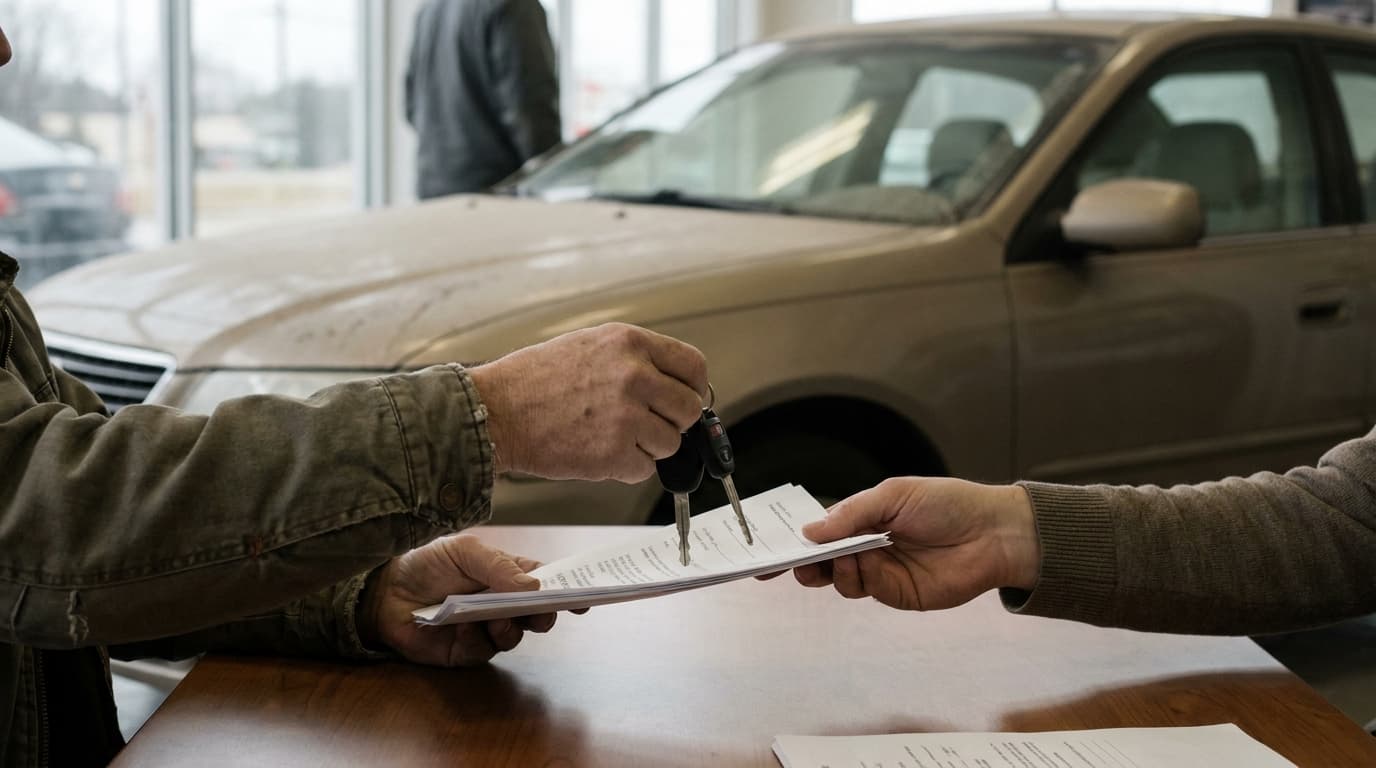
When comparing trading in a car with selling it privately, the biggest differences involve potential selling price, time commitment, paperwork, and transaction responsibilities. Private selling gives you greater control over your asking price and negotiations, but it also requires you to manage the process independently. Trading in your vehicle generally offers a more streamlined experience, particularly when you're planning to purchase another car.
A dealership trade-in allows you to receive an offer for your current vehicle and potentially apply its value toward another purchase. With ClearCar's ClearCash process, drivers can begin requesting a vehicle valuation online without creating private advertisements or coordinating multiple buyer inquiries. Important differences between the two selling methods include:
- Selling Price: Private sales may generate higher offers, while trade-in values account for dealership resale and reconditioning costs.
- Convenience: Trading in can combine selling and purchasing into one coordinated transaction.
- Timing: A trade-in can often be completed more quickly than waiting for a private buyer.
- Negotiations: Private sellers negotiate directly with buyers, while online cash offer services provide an offer for review.
- Paperwork: Dealerships may help coordinate ownership transfers and financing arrangements.
- Payment Security: Private sellers must independently verify payment before releasing their vehicles.
- Tax Considerations: Eligible trade-ins may reduce the provincial sales tax payable on another vehicle purchase.
- Vehicle Preparation: Private sellers may spend additional time cleaning, photographing, and advertising their vehicles.
Which Option Offers the Best Financial Value?
Selling a vehicle privately can sometimes produce a higher selling price than trading it in. Private buyers may be willing to pay closer to a vehicle's retail market value, while dealerships must account for inspections, reconditioning, inventory management, and resale expenses. However, a higher initial offer doesn't automatically mean a better overall financial outcome.
For example, imagine you're selling a used SUV in British Columbia. A private buyer offers $22,000 CAD, while a dealership provides a trade-in offer of $20,500 CAD. At first glance, the private sale appears more attractive because it provides an additional $1,500. However, if you're purchasing another vehicle, an eligible trade-in could reduce the amount of provincial sales tax payable on that purchase.
Assuming a qualifying transaction and a replacement vehicle subject to the standard 7% PST rate, a $20,500 trade-in could provide $1,435 in provincial tax savings. This would bring the combined financial benefit to approximately $21,935, just $65 less than the private sale before accounting for additional selling expenses. Actual savings depend on the vehicle, purchase price, applicable tax rate, and eligibility requirements.
When deciding whether to trade a car or sell privately, consider:
- The difference between private-sale offers and trade-in values
- Potential provincial sales tax savings on eligible trade-ins
- Advertising and vehicle preparation expenses
- Time spent arranging meetings, inspections, and test drives
- Outstanding financing or lien discharge requirements
- The convenience of applying trade-in equity toward another purchase
- Your timeline for replacing your current vehicle
How Trading In a Car Can Affect Sales Tax in British Columbia
One potential financial advantage of trading in a vehicle in British Columbia is the opportunity to reduce the provincial sales tax payable on your next purchase. Under applicable BC rules, an eligible trade-in can reduce the purchase price used to calculate PST when the trade-in is accepted as part of the same qualifying transaction.
For example, imagine you're purchasing a used vehicle priced at $30,000 CAD and trading in your current car for $15,000 CAD. Without a qualifying trade-in, the 7% provincial sales tax on the $30,000 purchase would be $2,100. With an eligible $15,000 trade-in, the taxable amount could decrease to $15,000, resulting in $1,050 in PST. This represents a potential savings of $1,050.
It's important to understand that provincial tax treatment depends on the specific transaction. The trade-in must meet applicable eligibility requirements, and the provincial sales tax rate can vary based on the vehicle's classification and purchase price. A private sale followed by a separate vehicle purchase generally does not provide the same trade-in reduction.
Important tax considerations include:
- Eligible trade-ins may reduce the purchase price used to calculate BC PST.
- The trade-in must satisfy applicable provincial eligibility requirements.
- The replacement vehicle's price and classification can affect the PST rate.
- Private sales generally do not provide the same dealership trade-in PST reduction.
- Federal GST follows separate tax rules and is not automatically reduced by the BC PST trade-in deduction.
- Tax treatment may differ for leased vehicles and other transaction types.
Comparing Convenience, Safety, and Paperwork
Beyond financial considerations, selling a car privately requires additional time and responsibility. Private sellers typically need to photograph their vehicle, create advertisements, respond to inquiries, schedule meetings, and negotiate with potential buyers. Depending on market demand and the asking price, finding a qualified buyer may take several weeks.
Safety and payment security are also important considerations. Private sellers must arrange safe meeting locations, supervise test drives, verify payment, and complete the required ownership-transfer documentation. In British Columbia, this includes following applicable ICBC procedures. Vehicles with outstanding loans may require additional coordination to repay the lender and discharge registered liens.
Trading in through a dealership or online automotive marketplace can reduce many of these responsibilities. ClearCar's ClearCash process allows drivers to begin exploring their vehicle's value online and review an available offer before deciding whether to proceed. If you choose to accept, the remaining steps may include confirming vehicle condition, ownership, financing arrangements, and vehicle handoff.
Practical advantages of trading in can include:
- Less time spent advertising and communicating with prospective buyers
- No need to arrange repeated private test drives
- Reduced exposure to unfamiliar buyers and potential payment scams
- Assistance coordinating ownership-transfer documentation
- A more straightforward process for vehicles with outstanding financing
- Convenient arrangements when purchasing another vehicle
- Less uncertainty about finding a qualified private buyer
- A structured vehicle handoff and payment process
When Does Trading In Make More Sense Than Selling Privately?
Trading in your vehicle often makes sense when convenience, timing, and predictable transaction arrangements are more important than achieving the highest possible selling price. If you're planning to trade for a car that better fits your lifestyle, an eligible trade-in may also provide provincial sales tax savings that narrow the financial difference between a dealership offer and a private sale.
For example, if you need to replace your current vehicle quickly because of changing family needs, a longer commute, or increasing maintenance costs, waiting several weeks for a private buyer may not be practical. Trading in can allow you to coordinate the sale of your existing vehicle with the purchase of another car, reducing the time spent without reliable transportation.
Private selling may be more appealing when you're comfortable negotiating, have time to wait for a competitive offer, or don't intend to purchase another vehicle. However, drivers looking to explore cars on trade or apply their current vehicle's value toward another purchase may find a dealership trade-in more convenient.
Trading in may be especially beneficial when:
- You want to replace your current vehicle without a lengthy selling process.
- You're purchasing another used car and may qualify for BC PST savings.
- You prefer not to negotiate with multiple private buyers.
- Your current vehicle has an outstanding loan requiring coordination.
- You want to avoid arranging private test drives and meetings.
- You have positive trade-in equity to apply toward another vehicle.
- You value a structured transaction with clear next steps.
Trade Your Car Online with ClearCar
ClearCar makes it easier to explore vehicle trade-in options through ClearCash, an online cash offer solution that allows drivers to begin researching their vehicle's value from home. Rather than independently advertising your car and waiting for private buyers, you can submit vehicle information online, review an available offer, and decide whether proceeding makes sense for your needs.
If you're planning to trade for a car, ClearCar also provides access to pre-owned vehicles from participating OpenRoad Auto Group dealerships. Shoppers can compare cars, trucks, SUVs, and electric vehicles across different brands, model years, and price points. ClearCar's TruePrice approach provides upfront, no-haggle pricing on available used inventory, helping you understand how your trade-in value may contribute toward your next purchase.
Now that you understand the differences between trading in and selling privately, explore ClearCar's convenient online cash offer process and find out what your current vehicle may be worth. ClearCar is proud to help drivers throughout Vancouver, Richmond, Burnaby, Coquitlam, Surrey, and the Lower Mainland explore selling and trade-in options that fit their needs and budgets.
Trading vs Selling Privately FAQs
It depends on your priorities. Private selling may produce a higher selling price, while trading in can provide greater convenience, fewer transaction responsibilities, and potential provincial sales tax savings when purchasing another vehicle.
Ready to shop?
Every ClearCar vehicle includes a free CARFAX Canada report, a 210-point inspection and a 7-day money-back guarantee.